Top 10 Museums in China
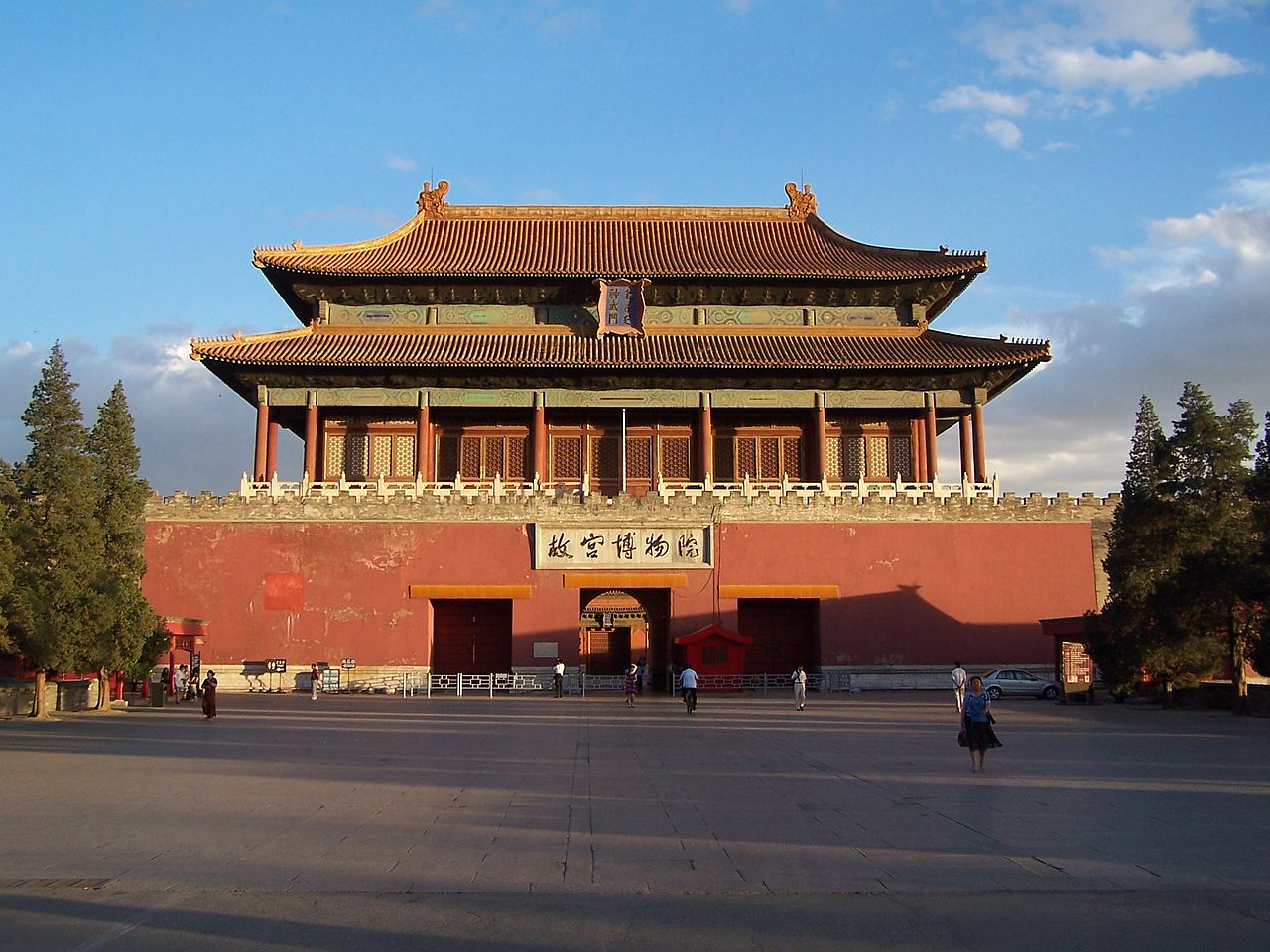
China has invested heavily in museum infrastructure over the past two decades, building several of the world's largest institutions while also developing regional museums that contextualise deep local histories. The institutions below span imperial court collections, ancient burial archaeology, silk history, and bronze-age chime music — a range that reflects the extraordinary time depth and geographic breadth of Chinese civilisation.
Find them all on the map before planning your visit.
1. Palace Museum, Beijing
The Palace Museum, founded in 1925 in the former imperial Forbidden City, holds approximately 1.86 million objects — the largest collection in any Chinese museum — including imperial paintings, bronzes, ceramics, jade, court furniture, and documentary archives spanning the Song, Yuan, Ming, and Qing dynasties. The 72-hectare complex of 980 surviving buildings was constructed between 1406 and 1420 during the Yongle Emperor's reign. A major digitisation programme begun in the 2010s has placed over 50,000 high-resolution images in public access; the museum now attracts around 20 million visitors annually through a timed-entry ticketing system. Tickets sell out well in advance during peak periods; booking online is essential.
2. Shanghai Museum, Shanghai
The Shanghai Museum, opened in its current building on People's Square in 1996 (architect: Xing Tonghe, whose circular form references an ancient bronze ding vessel), holds 140,000 objects covering Chinese bronzes, ceramics, calligraphy, painting, jade, coins, furniture, and minority peoples' art. The bronze collection — spanning the Shang dynasty (c.1600 BCE) through the Han — is regarded as the finest outside the Palace Museum. The museum's decision to admit visitors free of charge since 2009 has made it one of the most visited in the country. An expansion and second campus project has been under development, with new galleries planned for the Pudong district.
3. National Museum of China, Beijing
The National Museum of China on the eastern side of Tiananmen Square, formed in 2003 from a merger of the National Museum of Chinese History and the National Museum of Chinese Revolution, is by floor area one of the largest museums in the world. The present building, a 2011 renovation and expansion by gmp Architekten, increased usable space to nearly 200,000 square metres. Its Ancient China gallery traces civilisation from prehistoric cultures through the Qing dynasty; the Road to Rejuvenation permanent exhibition covers modern Chinese history from 1840 to the present. The museum holds the original bronze chariot and horse excavated from the Qin Shi Huang mausoleum. Free admission with ID registration; open Tuesday to Sunday.
4. Suzhou Museum, Suzhou
I.M. Pei designed the Suzhou Museum — opened in 2006 and his self-described farewell gift to his hometown — as a building that negotiates between the white plaster walls of the adjacent UNESCO-listed Humble Administrator's Garden and the geometry of his earlier Louvre pyramid. The structure uses granite, steel, and glass in a composition of interlocking geometric volumes and reflecting pools that manages to feel both contemporary and continuous with the classical garden tradition. The collection covers Suzhou's history as a centre of silk production, Kun opera, calligraphy, and painting, with particular strength in works by Wu School painters of the Ming dynasty. Open Tuesday to Sunday; free admission.
5. China National Silk Museum, Hangzhou
The China National Silk Museum in Hangzhou, opened in 1992 and expanded substantially since, is the largest textile museum in the world dedicated to a single material. The collection covers 5,000 years of silk production from the Liangzhu culture through the present, displaying looms, dye samples, imperial robes, and trade goods from the Silk Road routes that carried Chinese silk westward to Rome and the Byzantine Empire. The museum's restoration and conservation laboratory is one of the most active textile conservation facilities in Asia. Located near the West Lake, the museum is free and open daily except Mondays.
6. Museum of the Terracotta Warriors, Xi'an
The Qin Shi Huang Emperor's Mausoleum Museum near Xi'an — commonly known as the Terracotta Army Museum — covers the pit complexes discovered in 1974 by farmers digging a well. Pit 1 alone contains an estimated 6,000 life-size terracotta soldiers, horses, and chariots arranged in battle formation; Pits 2 and 3 hold cavalry, archers, and command units. The figures were originally painted in vivid colours that have since faded; conservation research into preserving colour on newly excavated pieces is among the most technically challenging projects in current museum science. The Emperor's burial mound itself remains unexcavated. Open daily; admission charged; book tickets in advance during Golden Week holidays.
7. Hong Kong Palace Museum, Hong Kong
The Hong Kong Palace Museum, opened in the West Kowloon Cultural District in July 2022, was established through a cooperation agreement with the Palace Museum in Beijing to display imperial collections in Hong Kong permanently. The building — designed by Rocco Yim — holds approximately 35,000 square metres of exhibition space across nine permanent galleries displaying bronzes, jade, paintings, furniture, and documentary material from the Forbidden City collection. The institution is Hong Kong's newest major museum and represents the largest loan of Palace Museum objects to any institution outside mainland China. Open Thursday to Tuesday; admission charged.
8. Shaanxi History Museum, Xi'an
The Shaanxi History Museum, opened in 1991 in Xi'an, covers the history of Shaanxi Province — the geographic heart of early Chinese civilisation — from the Paleolithic period through the Qing dynasty. The collection of over 170,000 objects includes Tang dynasty tri-colour glazed ceramics, Han dynasty bronze mirrors, Zhou dynasty bronzes, and the Hejiacun Treasure: a cache of Tang imperial gold and silver objects discovered in 1970 that remains among the most spectacular hoards in Chinese archaeology. The museum is free for most visitors; popular galleries require a separately booked ticket. Open Tuesday to Sunday.
9. Hubei Provincial Museum, Wuhan
The Hubei Provincial Museum in Wuhan is justly famous for a single discovery: the intact tomb of Marquis Yi of Zeng, excavated in 1978 from the Leigudun site in eastern Hubei. Among the tomb's contents was a set of 65 bronze chime bells — bianzhong — that span five octaves and can still be played, despite being cast around 433 BCE. The bells, displayed in their original lacquered wooden frame, are among the most astonishing objects in any Chinese museum. The museum also holds significant Chu Kingdom bronzes and the museum's newer lakeside building, completed in 2007, provides substantial gallery space for temporary exhibitions.
10. Sichuan Museum, Chengdu
The Sichuan Museum in Chengdu, relocated to a new 70,000-square-metre building in 2009, holds over 320,000 objects covering Sichuan's distinct cultural history, from the Sanxingdui bronze culture (c.1600-1100 BCE) to Tibetan Buddhist art and Sichuan opera costumes and masks. The museum's Sanxingdui gallery presents objects from the Bronze Age ritual pits discovered near Guanghan — including extraordinary large-eyed bronze masks and a gold-foil face covering that have no parallel in the broader Chinese archaeological record — though the main Sanxingdui objects are now presented at the purpose-built Sanxingdui Museum in Guanghan, which underwent a major expansion in 2023. Free admission; open Tuesday to Sunday.